
Water damage cleanup and drying · La Mesa, CA
Water Damage Restoration in La Mesa, CA: What Happens After the Water Stops
The pipe is fixed or the rain has stopped, and now there is a wet floor, a stained ceiling and a damp smell. What happens in the next day or two decides how much has to be torn out. This page covers what to do first and what usually comes out or stays.
Right now: stop the source and protect what you can
Drying cannot start until the water stops. If a pipe is still leaking, close the shutoff for that line or the main. If water is coming in from outside, deal with that source first, and do not stand in water if electrical outlets or appliances are near it.
- Stop the source. Close the shutoff valve or the main. If you cannot find it, shut off the main at the meter box.
- Stay safe. Keep away from standing water near outlets, cords and appliances. Turn off power to the area if you can do so safely.
- Lift what you can. Move furniture, rugs and boxes out of the water, and prop up items that cannot be moved.
- Take photos. Photograph everything before you move or throw out anything. You will want a record.
- Call for help. Describe what is wet and where the water came from.
Water in the house? Call now and tell us what is wet and where it came from.
Call (888) 681-3447What kind of water is it?
How the water is handled depends on where it came from. Water from a supply pipe is cleaner than water from a drain or the outdoors, and the difference changes what can be saved. Tell the plumber the source as soon as you know it.
Likely cleaner water
- A burst or leaking supply pipe
- A failed water heater
- A fixture supply line
- A leaking tub or shower valve
Treat as contaminated
- A sewage backup or overflow
- Floodwater from outside
- Water that sat for days
- Any water you cannot trace
EPA guidance says not to use fans until you know the water is clean, and to consult an experienced professional if sewage is suspected. If the source was a sewer line, read the first-steps section on a backed-up sewer line before touching anything.
What dries in place and what comes out
Not every wet material has to go. EPA guidance gives a first read on common surfaces, and the plumber or restorer should explain how your own materials compare. Their reasons matter as much as their verdicts.
| Material | What the guidance says | What to ask |
|---|---|---|
| Carpet | Extract the water, then dry with dehumidifiers and fans, aiming for a 24 to 48 hour window | How soon can extraction start? |
| Wallboard | May be dried in place if there is no obvious swelling and the seams are intact; otherwise remove and replace | How will you check the inside of the wall? |
| Ceiling tile and panels | Discard and replace | Is there insulation above that is also wet? |
| Hardwood and wood flooring | Remove moisture quickly and dry with dehumidifiers, gentle heat and fans, with caution on heat | Will the boards be monitored while they dry? |
The table is general guidance, not a verdict on your house. The first answers come from a moisture reading taken where the water went, not where it shows.
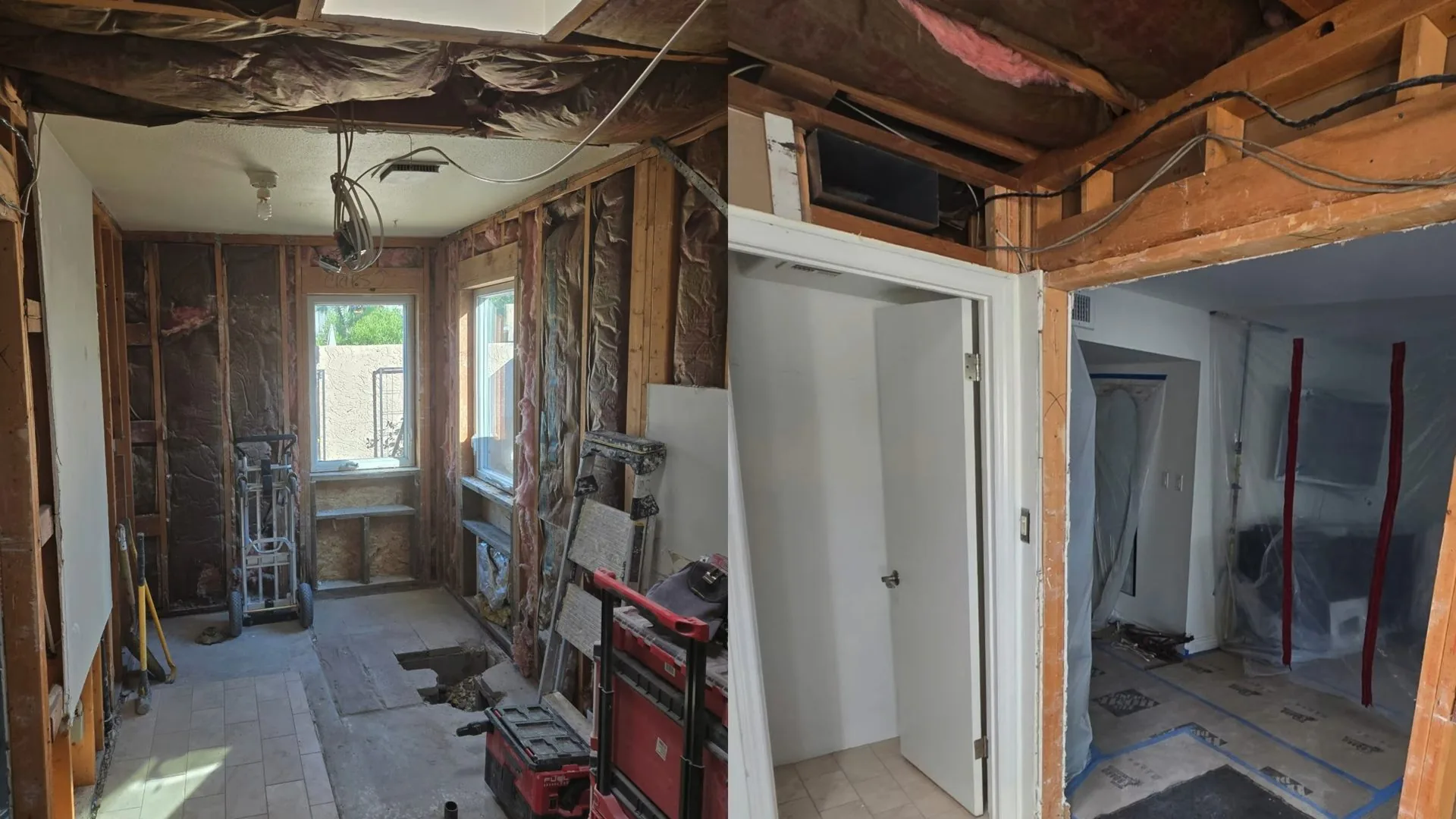
How water travels from an upstairs leak to ceilings below
Water travels. A leak upstairs shows up as a stain on the ceiling below, and a leak in an upstairs wall can run down the framing to the floor. The stain you see is the end of the path, not the start.
A bulging or sagging ceiling holds water and may fail, so keep people away from it. Ask the plumber or restorer whether a small opening can release the water safely and let them look inside. Insulation above a wet ceiling often needs to be removed too.
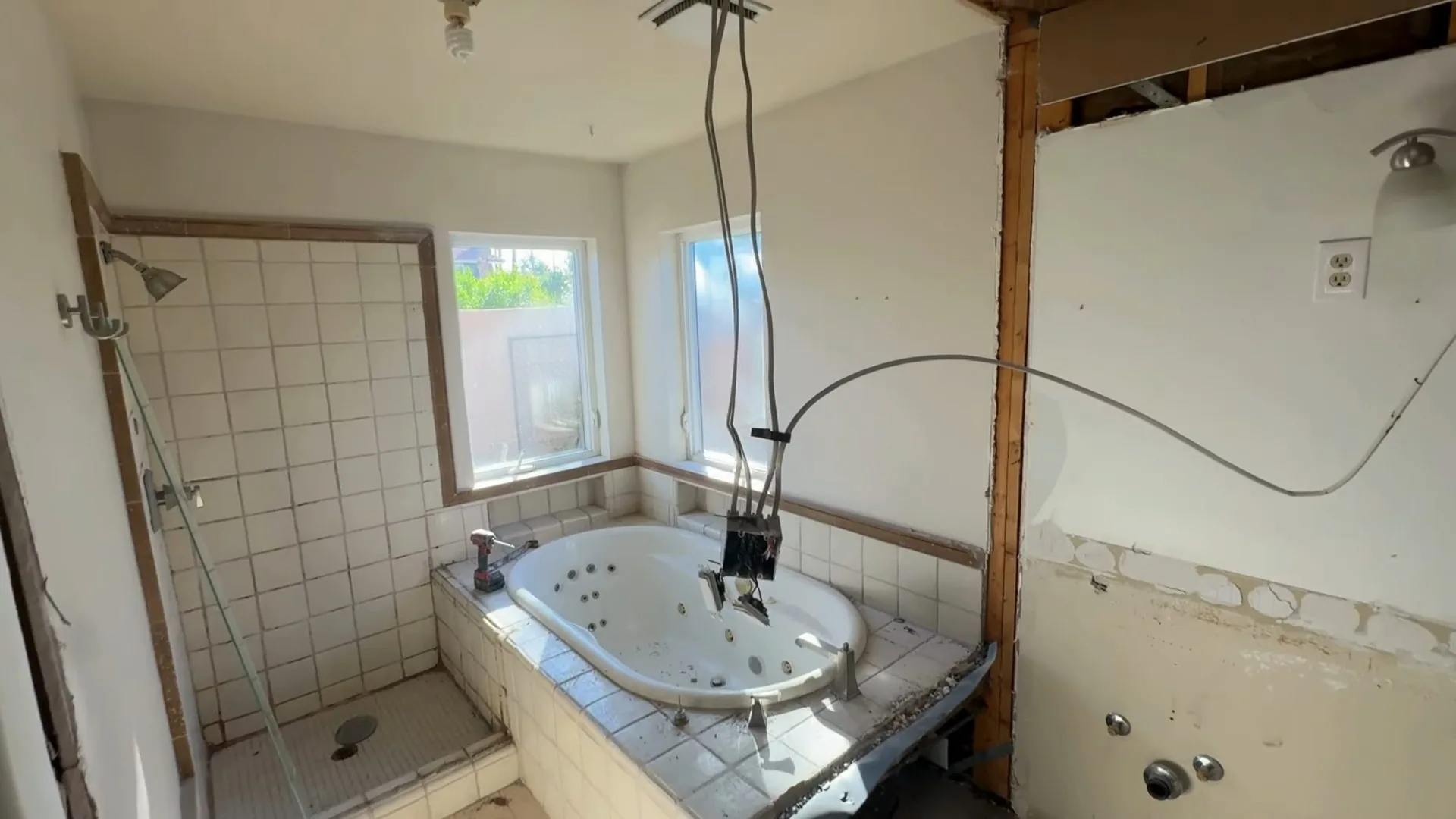
When the plumbing leak sat behind a shower or tub wall, drying the wall is part of the repair. a leaking shower valve explains how those leaks start and why they may be found late.
Rain and flooding from outside the house
La Mesa gets about 13 inches of rain a year, most of it between November and March. Most winters bring little trouble. A heavy storm can still push water into garages and low rooms, especially where drains are blocked or slopes direct runoff toward the house.
The County hazard plan notes strain on undersized storm infrastructure in La Mesa, which fits a pattern of water pooling where it cannot drain away. With winter highs in the 60s and 70s, ice dams are not a concern here, so the cause is almost always rain, a drain that backed up or a plumbing failure.
- Clear gutters, downspouts and yard drains before the rainy months. yard drains and downspouts covers what to check.
- Look at where the ground slopes against the foundation.
- Know where your main shutoff is before the storm, not during it.
Why the 48-hour mark matters for mold
EPA guidance frames the first 24 to 48 hours as the response window for drying wet materials. After that, mold is more likely, and more material may have to be removed. That is the reason to start drying quickly, even if the full cleanup comes later.
If mold has already appeared, or materials stayed wet beyond 48 hours, EPA guidance points to remediation steps that go beyond ordinary drying. Ask whoever does the work to put the scope in writing: what is being removed, what is being cleaned and how the area will be checked afterward.
Be careful with a quote that promises to remove mold without looking at the moisture source. If the source is still active, the problem will return. Ask for the moisture readings and a plan for the cause.
Shops, offices and multi-unit buildings
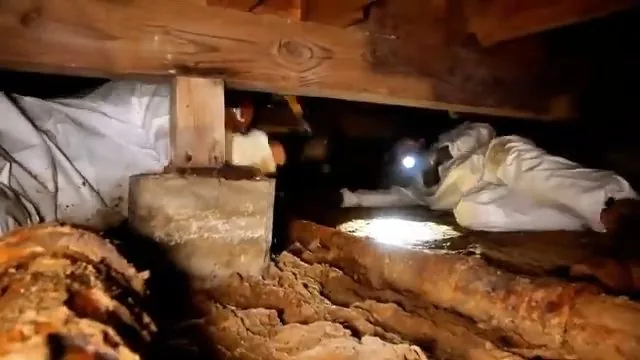
A commercial space has more people involved. The owner, the tenant, the building manager and the insurers may all have a stake. Tell the owner or property manager right away if you rent, because the lease often decides who handles the work.
Describe the building type, the area affected and whether the source has been stopped. Shared walls and floors mean water can move into neighboring units, so ask the plumber or restorer to check next door as well. Written findings and photos help every party.
If the cause was a plumbing failure, the repair comes first. The page on a burst pipe in a building covers that side, and this page covers the drying and cleanup that follows.
Insurance, paperwork and what to keep
Insurance rules vary by policy, so ask your carrier what is covered and what must happen first. Many policies expect you to prevent further damage and to document what happened. Do not discard damaged items until you have photographed them.
- Photograph the damage before moving or removing anything.
- Keep receipts for urgent steps and repairs.
- Ask the plumber for written findings on the cause.
- Save moisture readings and the drying log if a restorer provides them.
what drives restoration pricing explains how scope and drying time move a quote, and the leak detection steps can help prove where the water started.
Water damage questions people ask first
These are the questions that come up most often once the water has stopped and the cleanup begins.
How fast do I need to start drying?
EPA guidance points to a 24 to 48 hour window for drying wet materials. Past that, mold becomes more likely and more material may have to be removed. Start by stopping the source, then call and describe what is wet.
Can wet drywall be saved?
Sometimes. EPA guidance says wallboard may be dried in place if it has no obvious swelling and its seams are intact. If it has swollen or the seams have failed, it is removed. Ask the plumber to show you how they judge it.
What about carpet and padding?
Carpet that was soaked by clean water can often be extracted and dried quickly. Padding and carpet that sat in contaminated water are usually removed. Ask what was in the water before anyone decides.
What if the water came from a sewage backup?
Treat it as a contamination problem. EPA guidance says not to run fans until the water is known to be clean and to consult an experienced professional. Keep people and pets out, and describe the source when you call.
Do you handle commercial water damage?
Yes. Tell us the building type, the area affected and whether the source has been stopped. If you rent the space, tell the owner or manager right away, since the lease often decides who handles the work.
Wet floors or ceilings? Call La Mesa CA Expert Plumbers
Tell us where the water came from, what is wet and how long it has been there. We will help you plan the drying and cleanup.